
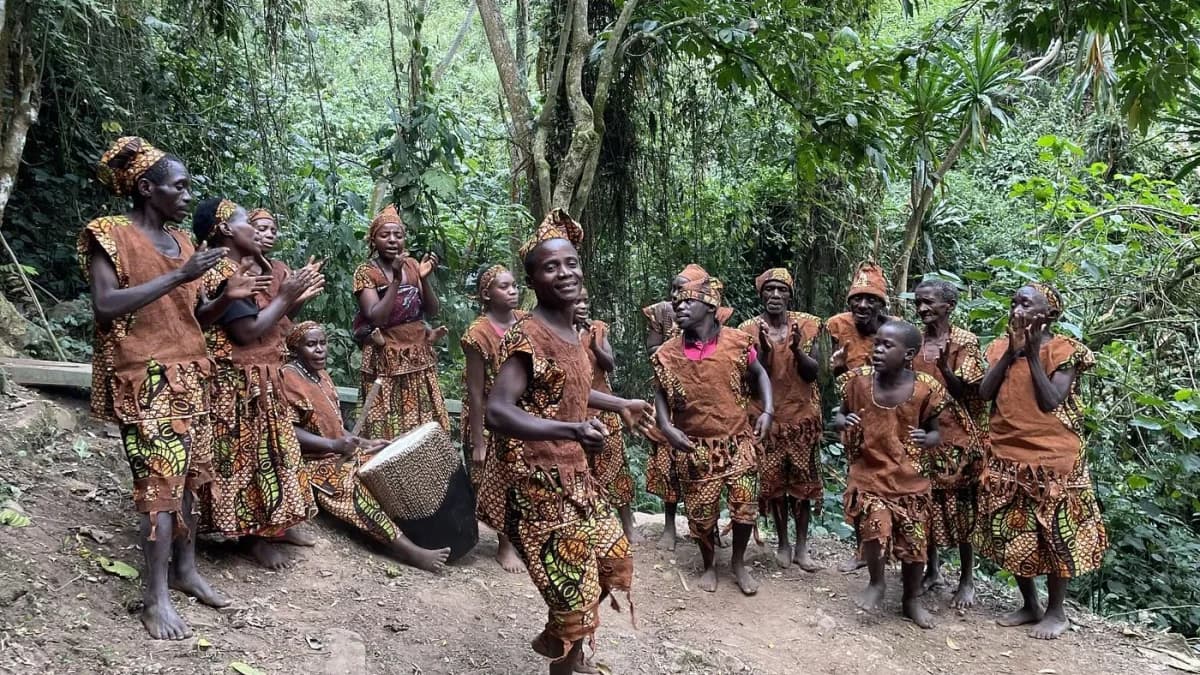
For thousands of years, the Batwa pygmy people lived in harmony with Bwindi forest. Today, cultural tourism helps preserve their heritage while supporting their community.
Long before Bwindi Impenetrable Forest was declared a national park, the Batwa people called this ancient forest home.
For an estimated 60,000 years, they lived as hunter-gatherers in close harmony with the forest ecosystem. They possessed deep knowledge of its plants, animals, seasons, and spiritual significance.
Their story is one of heritage, displacement, resilience, and cultural preservation.
Displacement and Resilience
When Bwindi was gazetted as a national park in 1991 to protect the mountain gorillas, the Batwa were displaced from their ancestral home.
Almost overnight, they lost access to the forest that had sustained them for generations. The transition was devastating. Without land, formal education, or modern livelihood skills, many Batwa communities struggled to survive outside the forest.
Despite these challenges, the Batwa have continued to preserve their identity, traditions, and connection to the forest.
Cultural Tourism as a Lifeline
Today, the Batwa Cultural Experience offers a powerful way to preserve Batwa heritage while also creating economic opportunities for the community.
Led by Batwa elders, visitors walk through the forest while learning about:
Traditional medicinal plants
Hunting techniques
Fire-making methods
Forest survival skills
The spiritual connection between the Batwa and the forest
This experience allows visitors to better understand the Batwa way of life and the deep relationship they have had with Bwindi for thousands of years.
What You’ll Experience
The trail includes a visit to a sacred cave that once served as a Batwa dwelling.
Along the way, Batwa elders demonstrate how they made fire, set traps, and identified different plant species for food and medicine. Their knowledge of the forest is passed down through storytelling, demonstrations, songs, and cultural performances.
The experience often culminates in traditional songs and dances that have been preserved across generations.
Supporting the Community
Revenue from the Batwa Cultural Experience goes directly toward community development programmes, including:
Education
Healthcare
Land acquisition
Permanent settlements
Community centres
Livelihood support
Several Batwa communities have now established more stable settlements with schools and community facilities, supported in part by tourism revenue.
Final Thoughts
Visiting the Batwa is more than a cultural activity. It is an opportunity to support cultural preservation, community empowerment, and reconciliation.
By taking part in the Batwa Cultural Experience, visitors help ensure that the heritage, knowledge, and identity of the Batwa people continue to be honoured for generations to come.


